Blog Details
How AI Chatbots Are Redefining Customer Support in 2026
Customer support in 2026 looks very different from what it was just a few years ago. Long wait times, repetitive queries, overwhelmed agents, and disconnected support channels are no longer acceptable to modern customers. Today’s consumers expect instant responses, personalized interactions, and seamless experiences across platforms.
At the center of this transformation are AI-powered chatbots.
What began as simple rule-based FAQ responders has evolved into highly intelligent, context-aware conversational systems capable of resolving complex issues, qualifying leads, escalating intelligently, and even predicting customer needs before they arise.
AI chatbots are no longer a “nice to have.” They are redefining how businesses deliver support.
Why Traditional Customer Support Models Are Failing
Rising Customer Expectations
Customers now expect:
-
Instant responses
-
24/7 availability
-
Personalized solutions
-
Omnichannel continuity
Waiting 24 hours for an email response or staying on hold for 20 minutes feels outdated. In 2026, responsiveness equals credibility.
Scaling Challenges for Growing Businesses
As businesses grow, so does customer demand. Hiring more support agents increases costs significantly. Training takes time. Quality varies. Human errors increase under pressure.
Traditional support models simply do not scale efficiently.
Repetitive Work Drains Productivity
Studies consistently show that 60–80% of customer support queries are repetitive:
-
Order tracking
-
Password resets
-
Refund policies
-
Appointment confirmations
-
Basic troubleshooting
These do not require human intelligence — but they consume human time.
AI chatbots solve this imbalance.
What Makes AI Chatbots Different in 2026?
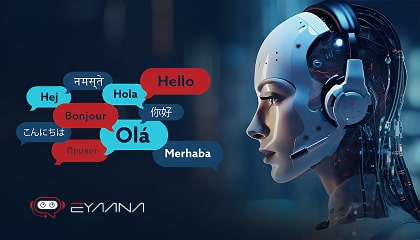
AI chatbots in 2026 are not scripted bots with rigid decision trees. They are powered by advanced Natural Language Processing (NLP), machine learning, and contextual intelligence.
Conversational Understanding
Modern AI bots understand intent — not just keywords. They can:
-
Interpret different phrasings of the same question
-
Detect urgency or frustration
-
Maintain conversational context
-
Handle multi-step interactions
This creates a far more human-like interaction.
Learning and Continuous Improvement
AI systems learn from:
-
Past conversations
-
Customer behavior
-
Resolution patterns
-
Feedback loops
Over time, they become smarter and more accurate — something traditional scripts cannot achieve.
Omnichannel Intelligence
Customers move between:
-
Websites
-
Mobile apps
-
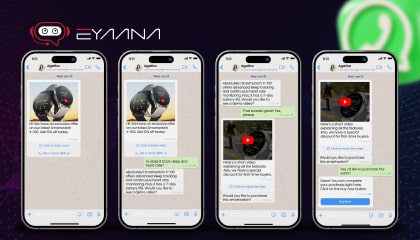
WhatsApp
-
Social media
-
Email
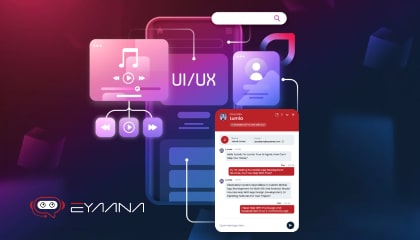
Modern chatbots maintain conversation history across channels, ensuring continuity. No more repeating the same issue multiple times.
The 5 Major Ways AI Chatbots Are Redefining Customer Support
1. Instant 24/7 Availability
AI chatbots never sleep. They respond instantly at any time — day or night — across time zones.
This dramatically reduces:
-
Response times
-
Customer frustration
-
Drop-offs
-
Support backlogs
Businesses now deliver round-the-clock support without increasing staffing costs.
2. Cost Efficiency Without Compromising Quality
Hiring, training, and managing support teams is expensive. AI chatbots handle high-volume repetitive queries, allowing human agents to focus on complex, high-value interactions.
This results in:
-
Reduced operational costs
-
Higher agent productivity
-
Faster resolutions
-
Improved ROI
AI doesn’t replace human agents — it empowers them.
3. Smarter Escalation to Human Agents
One common fear about automation is poor customer experience. But advanced AI systems now know when to escalate.
They can:
-
Detect emotional cues
-
Identify complex scenarios
-
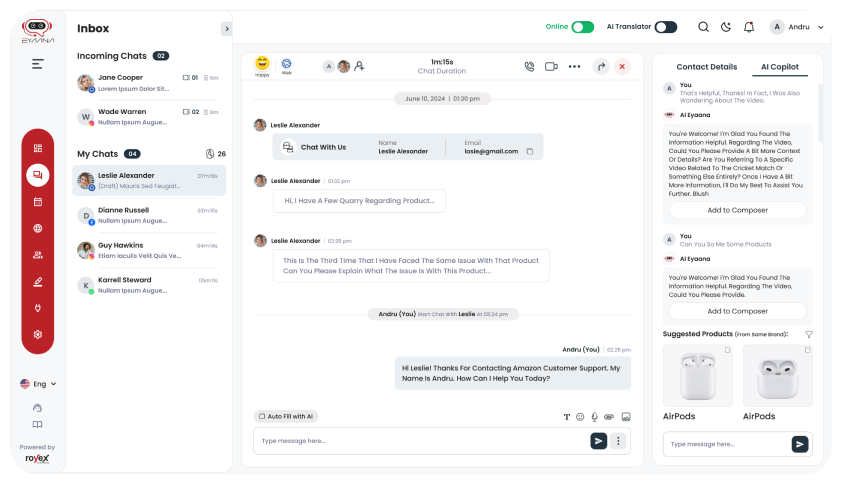
Transfer context-rich conversations to live agents
This ensures customers feel heard — not trapped in automation.
4. Personalized Customer Interactions
In 2026, personalization is no longer optional.
AI chatbots integrate with CRM systems to:
-
Access purchase history
-
Understand customer preferences
-
Track support history
-
Suggest relevant solutions
Instead of generic replies, customers receive tailored assistance — increasing satisfaction and loyalty.
5. Proactive Support and Predictive Assistance
The biggest shift in 2026 is proactive customer service.
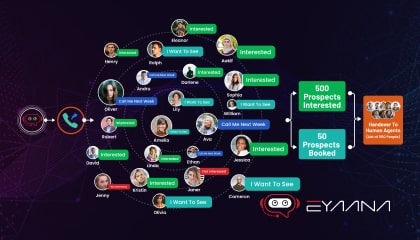
AI chatbots can:
-
Detect cart abandonment
-
Identify subscription renewal risks
-
Offer help based on browsing behavior
-
Notify users about delivery updates automatically
Support is no longer reactive — it’s anticipatory.
Impact on Key Business Metrics
Reduced First Response Time (FRT)
AI chatbots reduce response times from hours to seconds.
Improved Customer Satisfaction (CSAT)
Faster resolutions and personalized conversations lead to higher satisfaction scores.
Lower Support Costs Per Ticket
Automation significantly reduces the cost per interaction.
Increased Retention Rates
When customers feel supported, they stay longer.
Industry Adoption in 2026
AI chatbots are now standard across industries:
E-Commerce
-
Order tracking
-
Refund processing
-
Product recommendations
Banking & Finance
-
Account queries
-
Fraud alerts
-
Transaction history
Healthcare
-
Appointment booking
-
Symptom guidance
-
Insurance inquiries
SaaS & Technology
-
Technical troubleshooting
-
Onboarding assistance
-
Subscription management
No industry remains untouched.
Addressing Common Concerns About AI Chatbots
“Will AI Replace Human Agents?”
No. AI handles repetitive queries, while humans focus on complex and emotional interactions. It enhances, not replaces.
“Will Conversations Feel Robotic?”
Modern AI systems are conversationally advanced and context-aware. When designed correctly, they feel natural and intuitive.
“Is AI Secure?”
Enterprise-grade AI solutions integrate strict security protocols, encryption, and compliance standards to ensure data protection.
The Strategic Shift: From Support Cost Center to Growth Engine
In the past, customer support was seen as a cost center. In 2026, it’s a competitive advantage.
AI chatbots:
-
Improve conversion rates
-
Reduce churn
-
Boost brand perception
-
Drive upselling opportunities
Customer support is now part of revenue strategy.
Implementing AI Chatbots the Right Way
Simply installing a chatbot is not enough. Success depends on:
Clear Business Objectives
Define whether the goal is cost reduction, lead generation, faster support, or customer retention.
Proper Conversation Design
High-converting chatbot flows require:
-
Clear intent mapping
-
Logical conversation structures
-
Empathetic language
-
Smooth human handoff
Seamless Integration
AI chatbots must integrate with:
-
CRM systems
-
Payment gateways
-
Support ticketing tools
-
Marketing automation platforms
Without integration, automation loses effectiveness.
Why Businesses Are Turning to Eyaana
As businesses navigate this AI transformation, choosing the right partner is critical. Platforms like Eyaana are helping organizations design, implement, and scale intelligent conversational systems tailored to real business needs.
Through advanced AI architecture, intelligent automation frameworks, and scalable deployment strategies, Eyaana enables companies to:
-
Deliver 24/7 intelligent support
-
Automate repetitive workflows
-
Improve customer engagement
-
Increase operational efficiency
To explore how conversational AI can transform your support operations, explore Eyaana and discover how modern AI systems are redefining digital customer experiences.
The Future of Customer Support Beyond 2026
Looking ahead, AI chatbots will become even more:
-
Emotion-aware
-
Voice-integrated
-
Predictive
-
Hyper-personalized
Customer support will evolve into intelligent customer engagement ecosystems.
Businesses that adopt AI early will gain a significant competitive advantage. Those who delay risk falling behind in both efficiency and customer satisfaction.
Final Thoughts
AI chatbots are not just a technological trend — they represent a fundamental shift in how businesses interact with customers.
In 2026, customer support is:
-
Instant
-
Intelligent
-
Personalized
-
Proactive
-
Scalable
Companies that embrace AI-powered support are not just reducing costs — they are building stronger relationships, increasing loyalty, and positioning themselves for long-term growth.
The question is no longer whether to implement AI chatbots.
The question is how soon you start.
Do you need help?
We will provide detailed information about our services, types of work, and top projects. We will calculate the cost and prepare a commercial proposal.